Seminars / Lectures

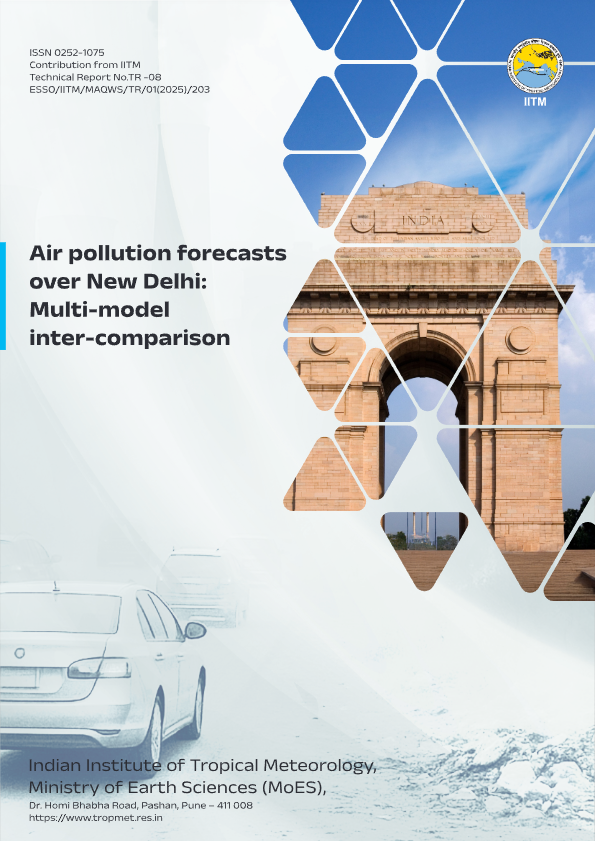
New Report by IITM Scientists
MoES-IITM High Resolution Global Forecast Model
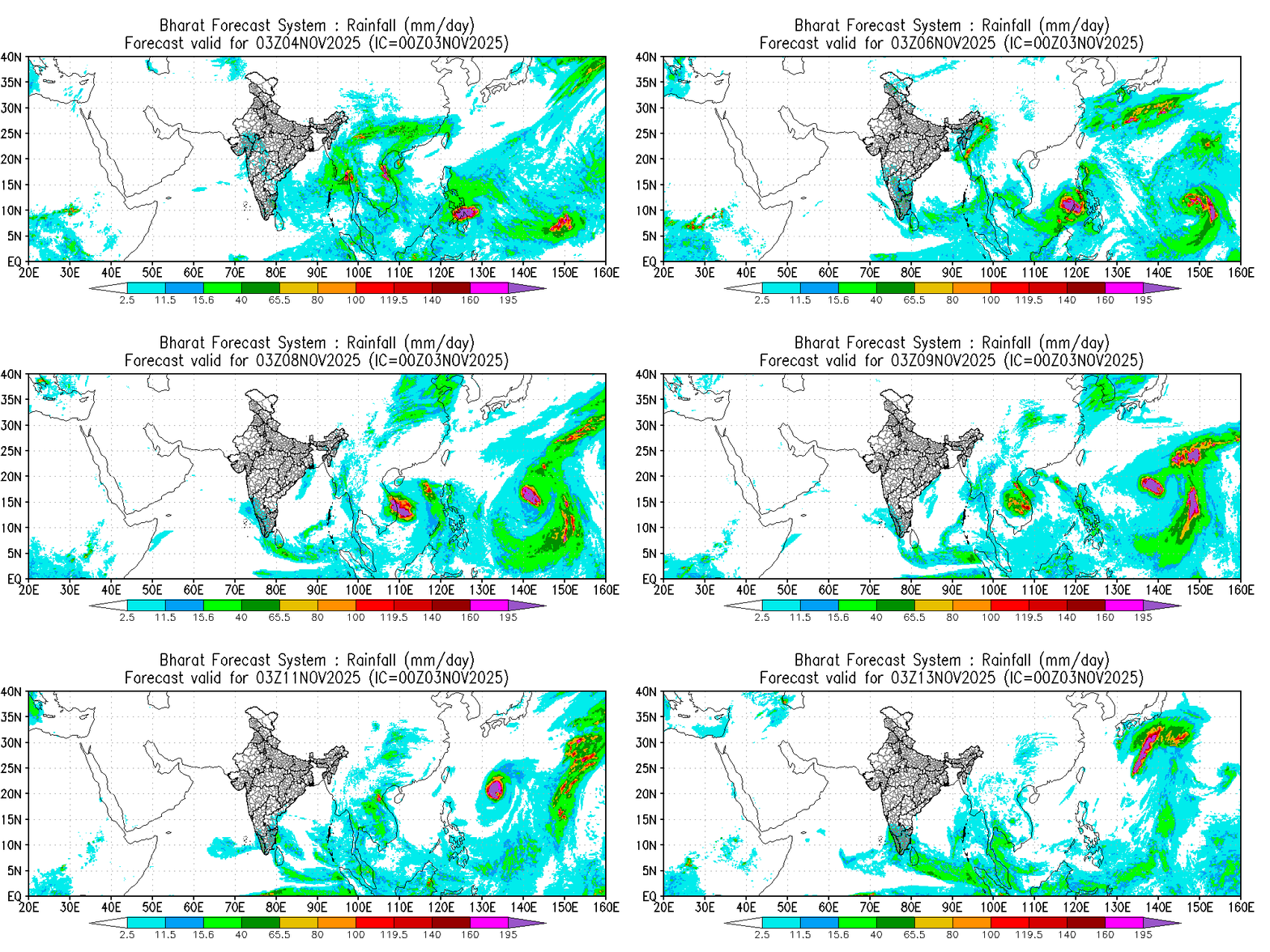
REAL TIME FORECAST
High resolution air quality forecast at 400 meter over Delhi

Air quality forecast at 10 km over India

IITM Publication Highlights
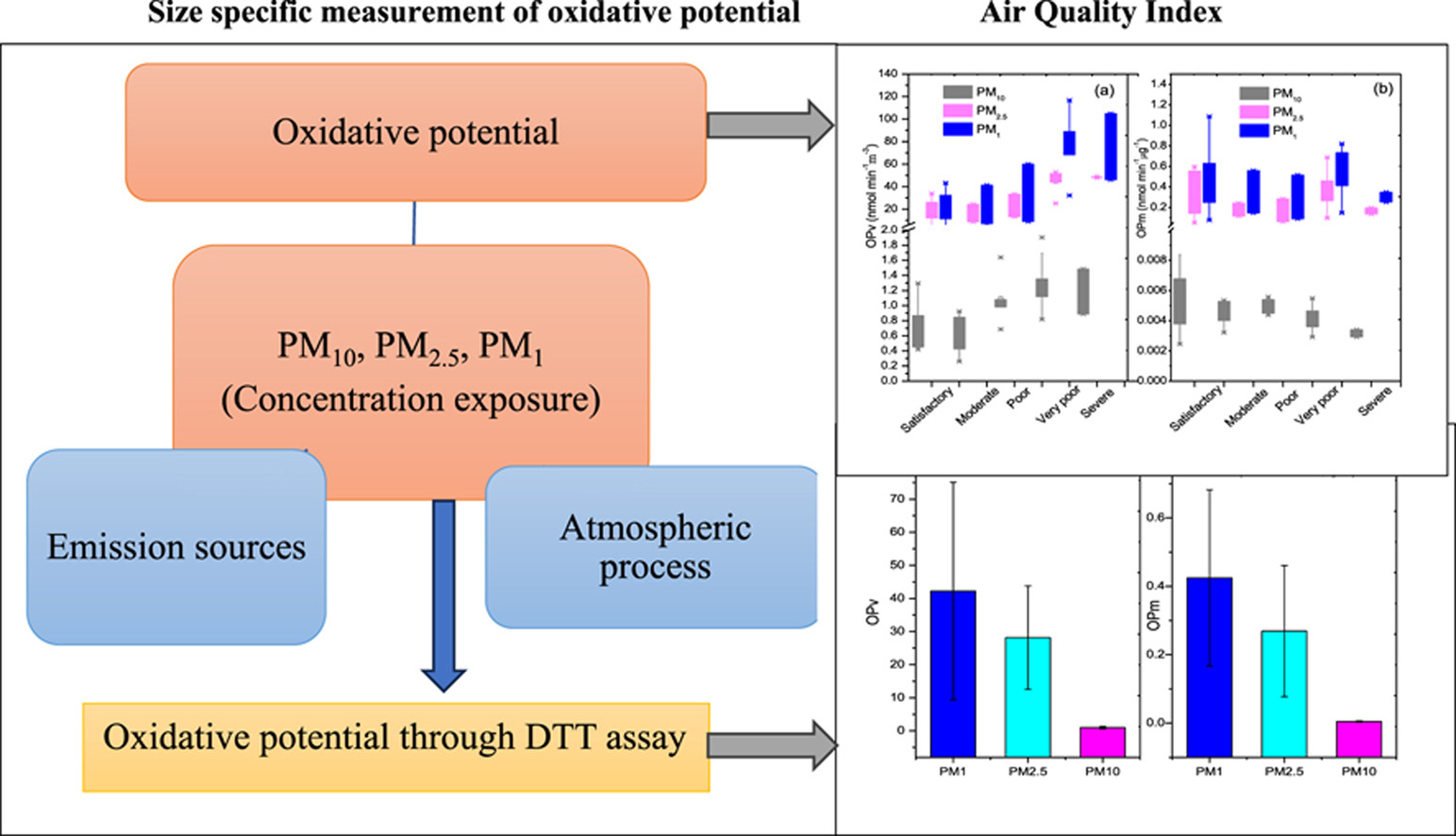
Impact of primary aerosol particles on size specific oxidative potential and its relationship with air quality and hazard index
This study investigates oxidative potential (OP) as a health-relevant metric. Primary aerosols significantly influence size-specific oxidative potential (OP), with volume-normalized OP showing a stronger link to their composition and sources than mass-normalized OP. This strong correlation with primary particles, particularly fine particles like PM1 and PM2.5, drives a higher hazard index (HI), indicating a significant health risk even on days with satisfactory air quality. Understanding these relationships is crucial for developing more effective air quality management strategies. The results provide critical insights into PM characteristics that could enhance existing air quality management strategies in Delhi.
Pipal A.S., Ghude S.D., Satsangi P.G., Bhatkar M.Y., Kale A., Nivdange S.S., Nageswar Rao M., Mukherjee A., Vispute A.S., Sharma H., Kumar V., Lonkar P., Kori P., Gosavi S., Atmospheric Environment, 361, November 2025, DOI:10.1016/j.atmosenv.2025.121451, 121451
Read More
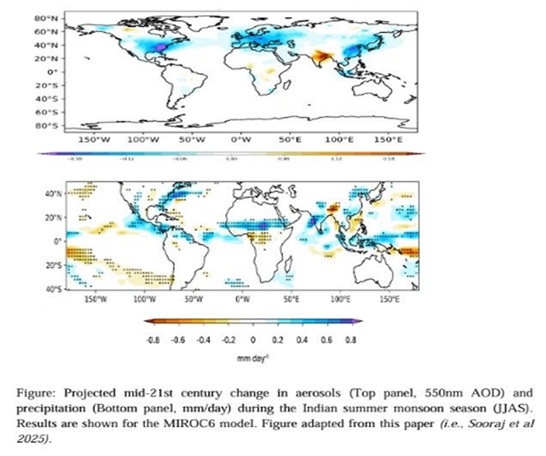
Future intensification of Northern Hemisphere monsoons due to declining remote aerosol pollution
Anthropogenic activities during the industrial era have substantially altered the planet’s atmospheric composition. This study utilizes DAMIP simulations to examine the mid-century response of NH summer monsoons to changes in aerosol emissions. The study reveals that reducing air pollution in the Northern Hemisphere’s industrialised continents could have a significant and far-reaching impact on future monsoon rainfall. The research finds that aerosols from North American and Eurasian continents play a substantial role in shaping monsoon precipitation, and that a drastic decrease in these pollutants will likely intensify summer monsoons in West Africa, North America, and South Asia. The study addresses a critical challenge in climate science. While it is known that air pollution from human activities, particularly aerosols, has greatly influenced past monsoon patterns, predicting future changes has been difficult. This research provides crucial insights, suggesting that efforts to improve air quality could have unintended climatic consequences thousands of miles away.
Sooraj K.P., Dhara C., Ayantika D.C., Vishisth K., Sumit K.M., Turner A.G., Krishnan R., Environmental Research Letters, 20, October 2025, DOI:10.1088/1748-9326/ae0f41, 1-12
Read More

Unraveling the July 2023 extreme rainfall in New Delhi: microphysical insights and large-scale atmospheric drivers
The extreme rainfall in New Delhi during July 2023 was driven by a combination of large-scale atmospheric conditions and microphysical processes, including the confluence of active monsoon trough, moisture-laden winds, and a slow-moving Western Disturbance. This study provides critical insights into the interaction of microphysical processes, convective dynamics, and large-scale atmospheric phenomena during extreme rainfall events in urban regions. These findings underscore the need for improved forecasting models and enhanced urban resilience strategies to mitigate risks from increasing precipitation anomalies linked to climate change.
Jana S., Rakshit G., Sarkar Sahadat, Balakrishnan S., Ganai M., Chakravarty Kaustav, Sai Krishnan K.C., Mukhopadhyay P., Climate Dynamics, 63: 413, October 2025, DOI:10.1007/s00382-025-07910-6, 1-23
Read More
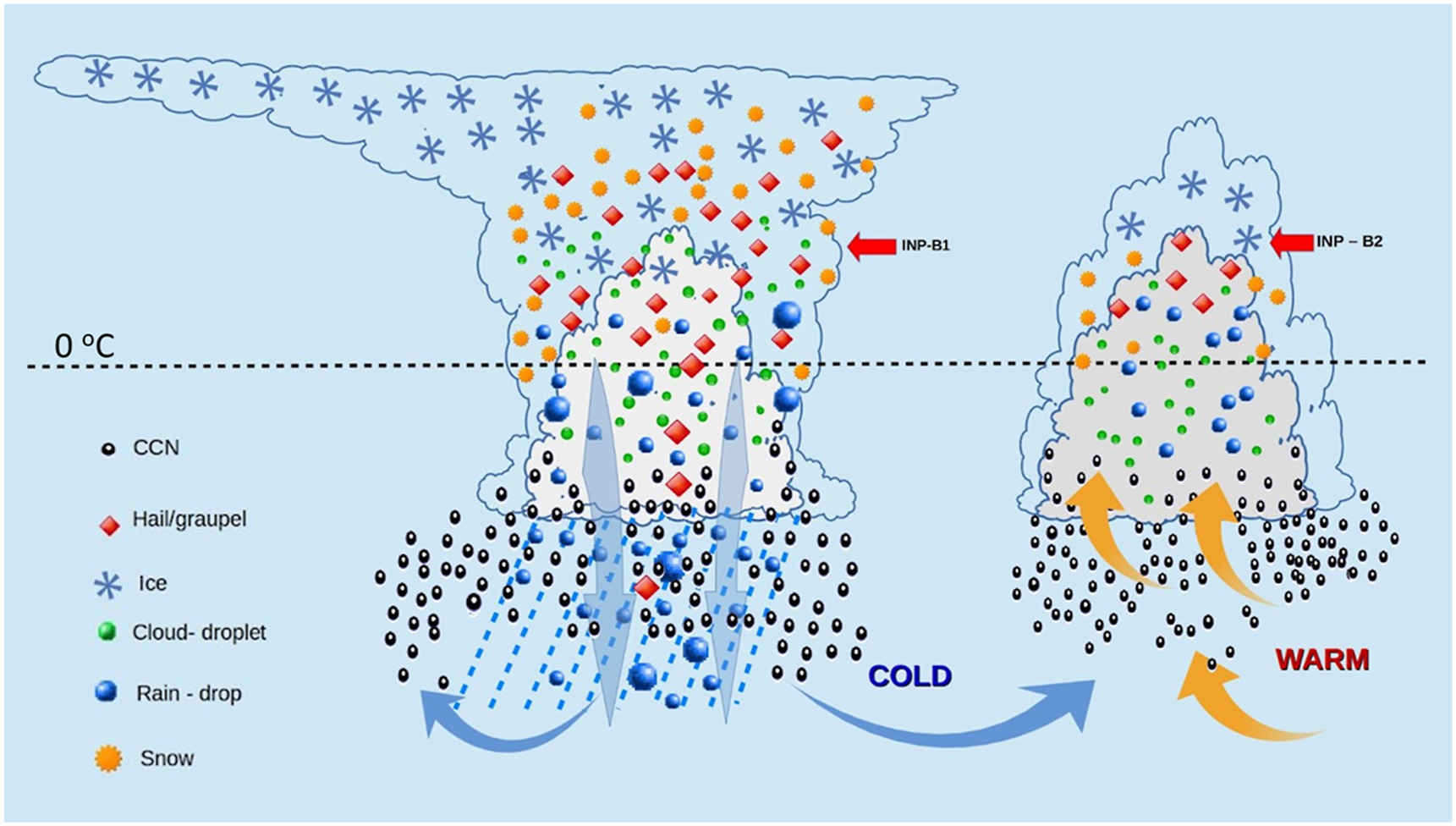
Aerosol impact on precipitation and cold pools over an arid region
This study investigates aerosol impacts in the primary and secondary convective cells and their associated cold pools resulting from the convective outflow over the dry and arid regions of the Indian peninsula. The primary objective of this study was to investigate the sensitivity of deep convective clouds and associated cold pools to aerosol perturbations, including both cloud condensation nuclei (CCN) and ice nucleating particles (INP). Cloud-resolving simulations at 1 km spatial resolution were performed using the WRF-ARW model, modified to include a numerical seeding experiment with INP under varying CCN environments. Cloud base CCN observations revealed significant spatial variability; accordingly, three different CCN settings—100, 1000, and 3000 cm−3—were used as control cases in the simulations.
Sandeep J., Gayatri K., Murugavel P., Thara P., Journal of Atmospheric and Solar Terrestrial Physics, 274, September 2025, DOI:10.1016/j.jastp.2025.106581
Read More
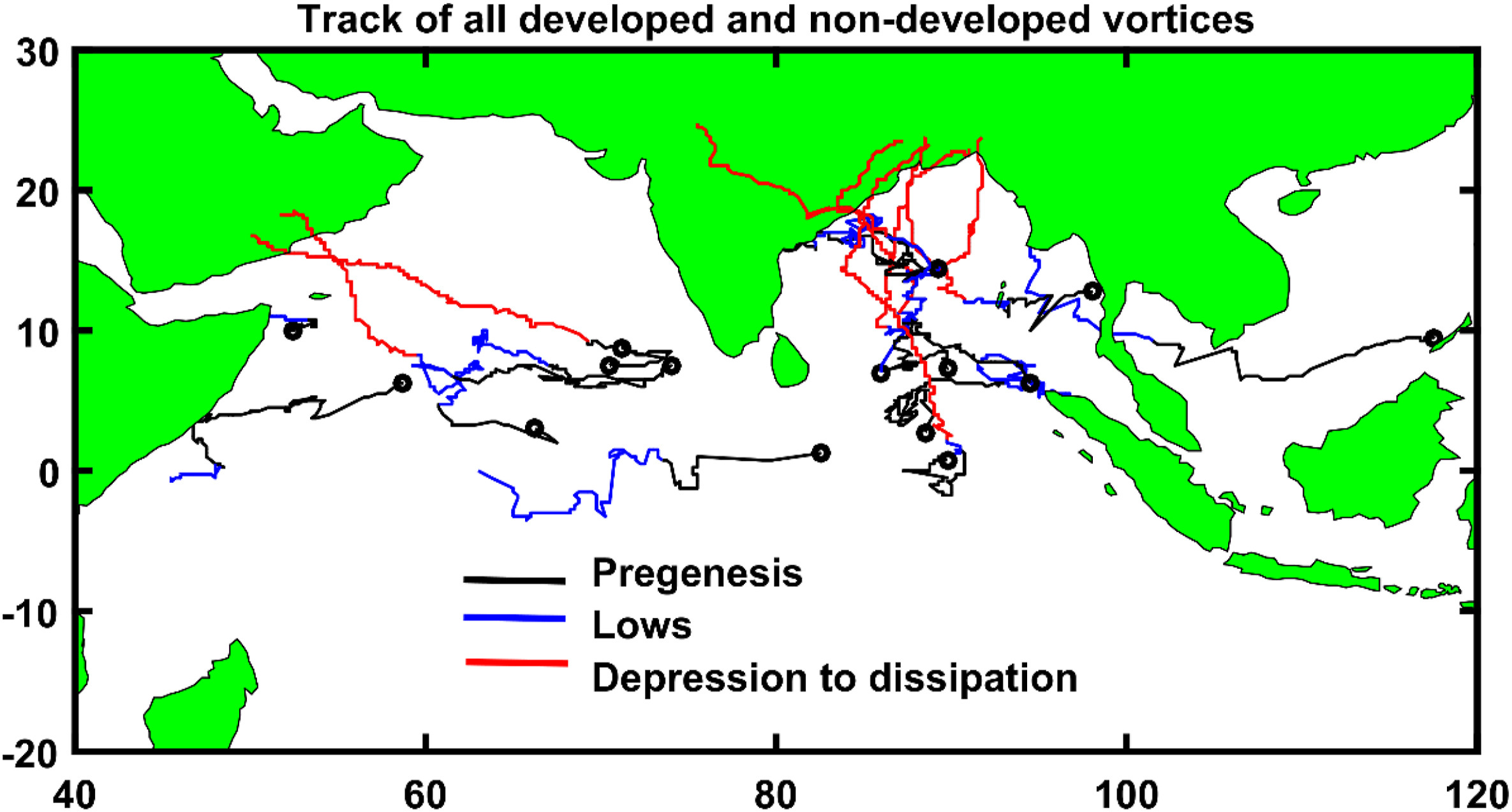
Application of stream function in tracking a quasi-closed circulation and its characteristics in developing and non-developing tropical cyclones over the North Indian Ocean
The stream function is used to track the quasi-closed circulation (QCC) of developing and non-developing tropical cyclones over the North Indian Ocean by identifying key points like the inflection point (IP) and stagnant point (SP) which mark the circulation center. This method can even identify the QCC up to five days before low-pressure area formation. A comparison of these characteristics between developing and non-developing systems is crucial for understanding the factors that lead to genesis and intensification.
Emmanuel R., Deshpande M., Anandh T.S., Toumi R., Ganadhi M.K., Ingle S.T., Tropical Cyclone Research and Review, 14, September 2025, DOI: 10.1016/j.tcrr.2025.07.002, 185-202
Read MoreNew Publications

Understanding Indian summer monsoon rainfall variability through the lens of tropospheric biennial oscillation: a study of temporal and spatial patterns in CMIP6 models
Arora A., Valsala V., Pillai P.A., Phani M.K.R., Climate Dynamics, 63: 389, October 2025, DOI:10.1007/s00382-025-07858-7, 1-24
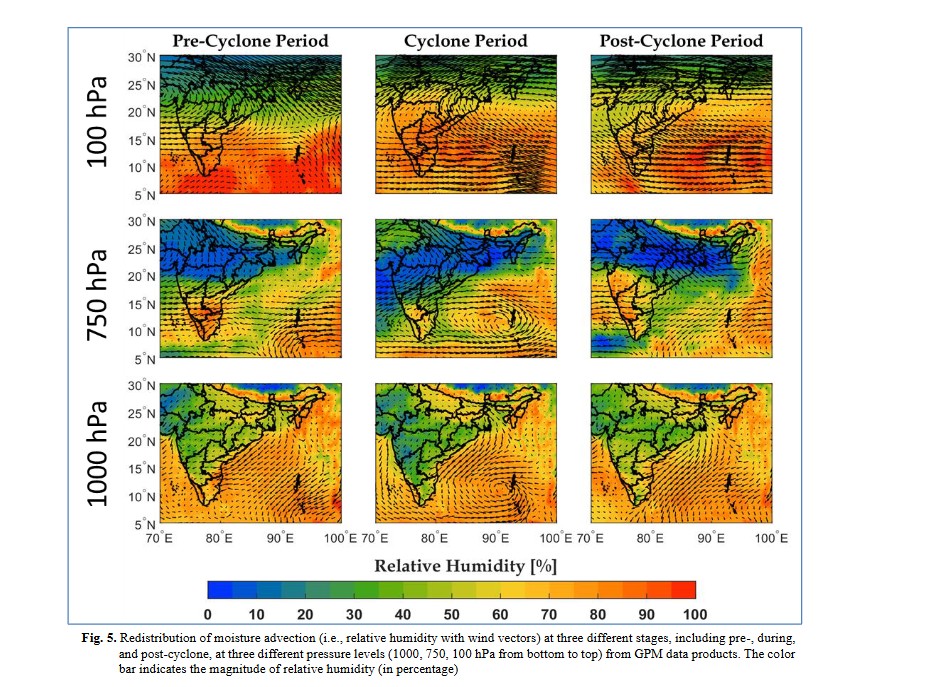
Assessing Aerosol Interactions and Re-Distribution During Very Severe Cyclonic Storm Vardah (2016) in the Bay of Bengal
Singh Vivek, Gupta H, Kumar A., Singh A., Singh S., Verma B., … et al., Mausam, 76, October 2025, DOI:10.54302/mausam.v76i4.7103, 1047-1062

Effects of Land and Ocean Initial Conditions on the Seasonal Prediction of Boreal Summer Monsoon Rainfall
Yashas S., Saha Subodh K., Pokhrel S., Konwar M., Ocean-Land-Atmosphere Research, 4: 0106, September 2025; DOI:10.34133/olar.0106, 1-14
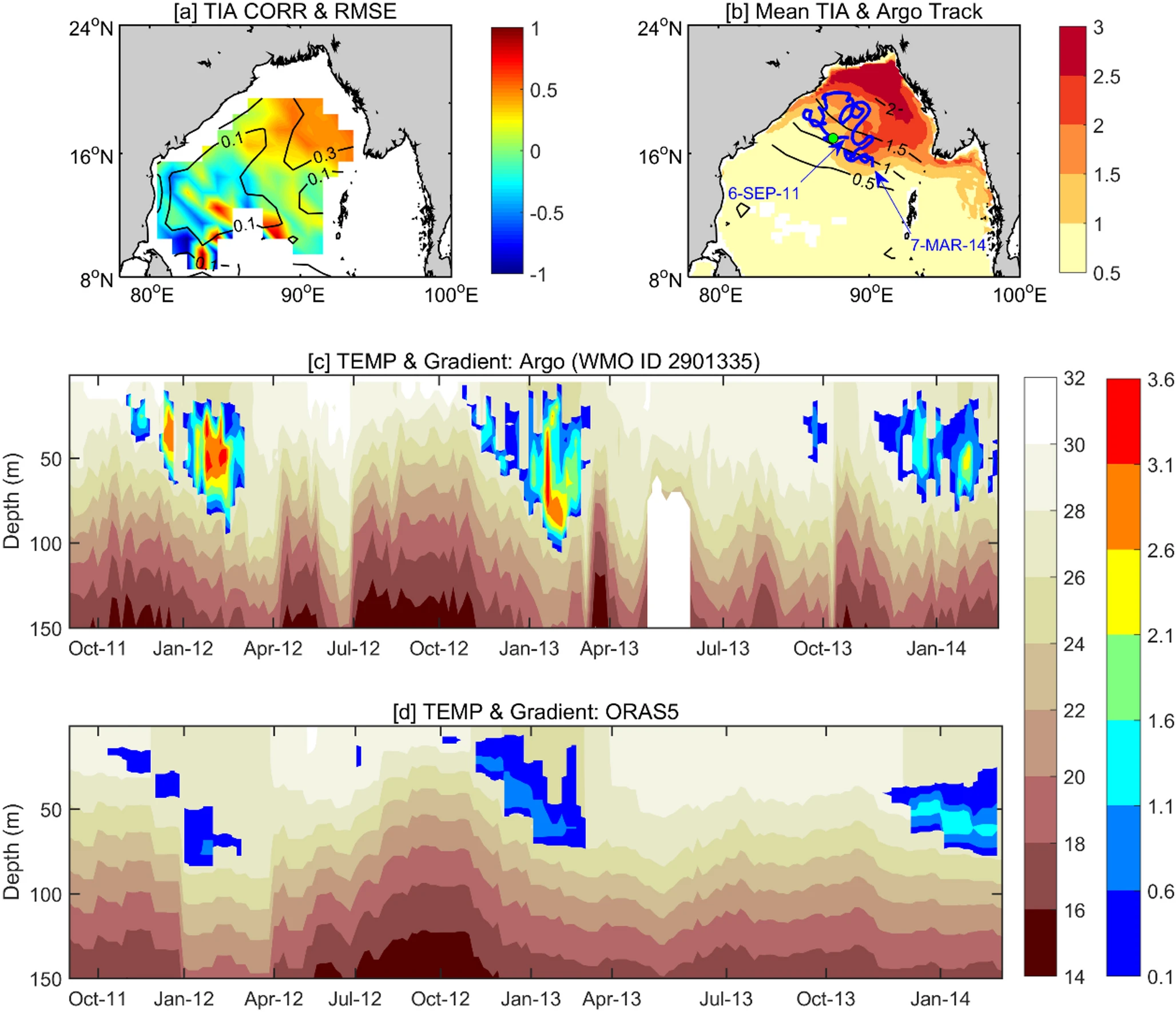
Unrepresented subsurface temperature inversion in the northern Bay of Bengal and associated forcing mechanisms
Pramanik S., Parekh A., Gnanaseelan C., Chowdary J.S. and Pai R.U., Climate Dynamics, 63, September 2025, DOI: 10.1007/s00382-025-07870-x, 371
IITM Events
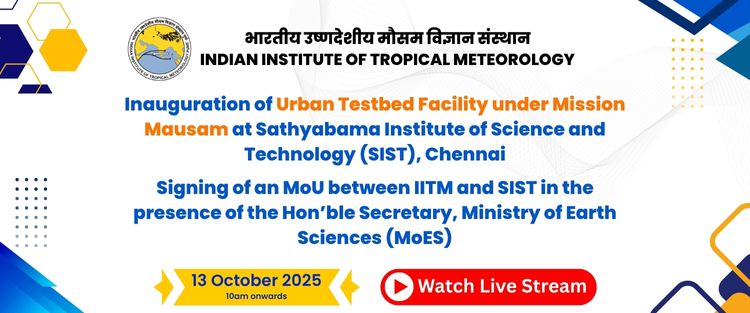
Inauguration of Urban Testbed Facilities
(13 October 2025)
A Memorandum of Understanding (MoU) has been signed between IITM and SIST (Satyabhama Institute of Science and Technology), Chennai in the presence of Hon’ble Secretary, Ministry of Earth Sciences, Govt of India and the inauguration of Mission Mausam Testbed Facility and Mission Mausam Laboratory by Dr. M. Ravichandran, Hon ’ble Secretary, MoES, Govt. of India at Sathyabhama University, Chennai on 13 October 2025.

Vigilance Awareness Week - 2025
(18 August 2025 to 17 November 2025)
IITM is observing a three-month Preventive Vigilance Campaign and Vigilance Awareness Week 2025, promoting ethical practices and employee participation through competitions, talks, workshops, and outreach programs, reinforcing the theme "Vigilance: Our Shared Responsibility."
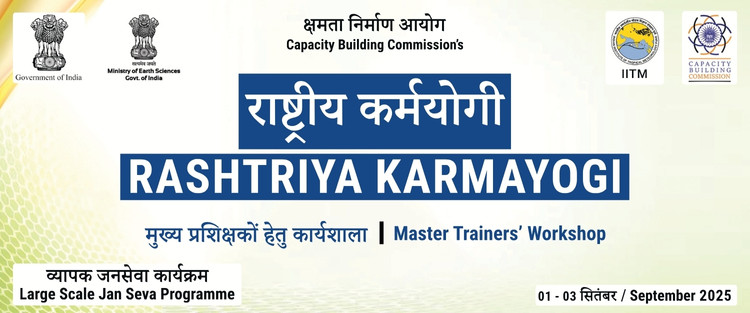
Capacity Building Commission’s Training Programs
(1–3 September 2025) (16-18 September 2025)
The training programs by the Capacity Building Commission
(i) 3-Day Master Trainer/Karmayogi Coach (MT/KC) Training under the Rashtriya Karmayogi Large Scale Jan Seva Programme was held for MoES during 1–3 September 2025.
(ii) Rashtriya Karmayogi Training Program was conducted at IITM Pune for the regular staff of IITM from 16-18 September 2025.

Rajbhasha Utsav - 2025
(01 August 2025 to 30 September 2025)
Rajbhasha Utsav - 2025 was celebrated from 01 August 2025 to 30 September 2025.Various Hindi competitions were held along with Hindi Diwas and Hindi Pakhwada.